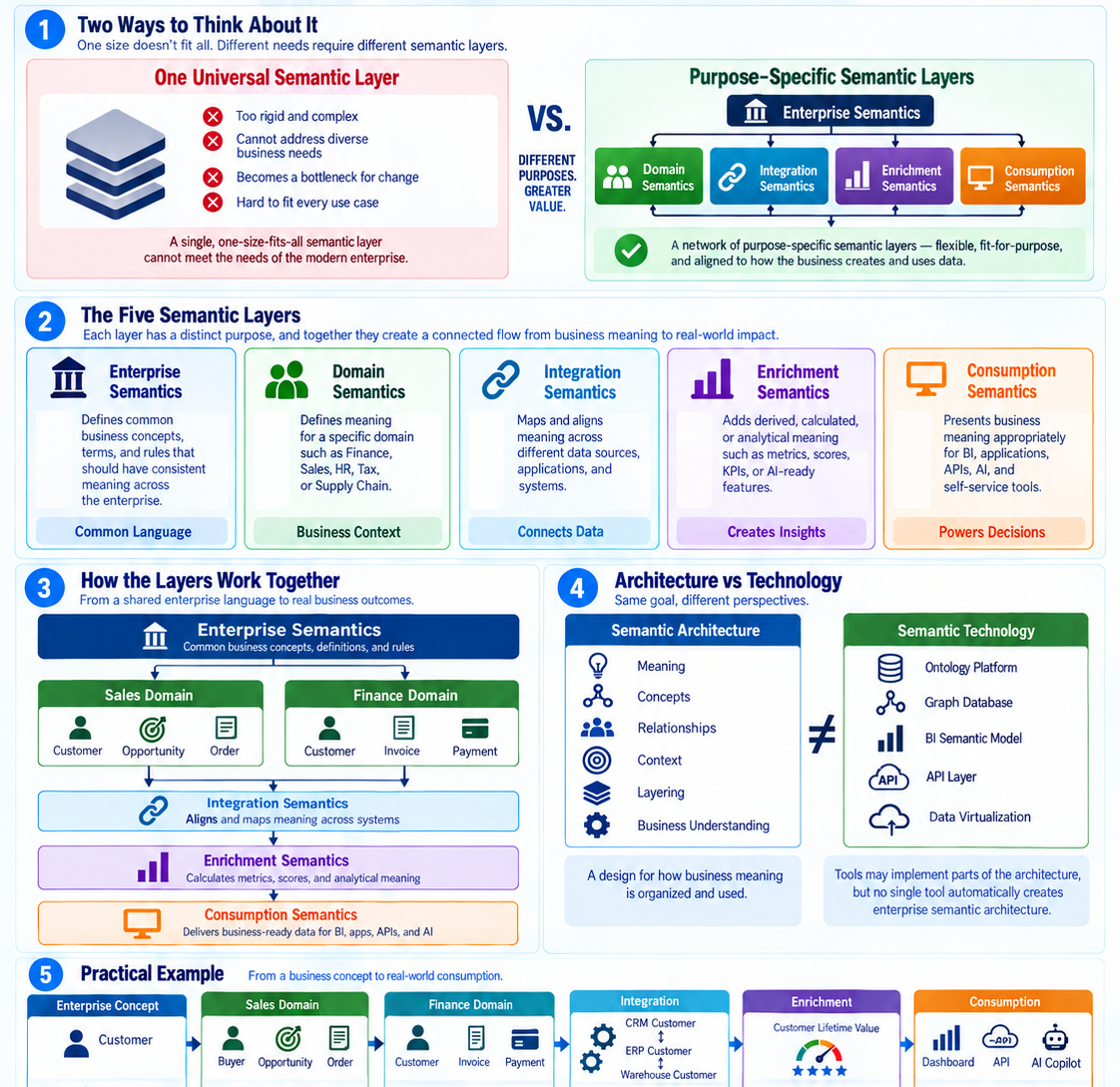
Create a trusted customer view across every relevant touchpoint.
Resolve fragmented customer records across CRM, transactions, digital channels, service and engagement systems into a governed customer model.
Illustrative solution pattern. The scope and measures are adapted to your sources and business definitions.
Measure the outcomes that matter.
These are example KPI categories—not performance claims—and are tailored to each client’s definitions.
Turn fragmented data into decision-ready context.
Who is the customer across systems?
Which customers are most valuable?
Who is at risk of churn?
Which channels drive engagement?
What products or services are used together?
From disconnected data to one governed model.
Unify the data once, model business meaning once, and reuse it across dashboards, analytics and AI.
What the solution can include.
Identity resolution
Align customer identifiers across systems.
Customer profile
Combine attributes, transactions and behaviors.
Segmentation
Create governed segments for analytics and activation.
Customer metrics
Standardize value, engagement and lifecycle KPIs.
Resolve identity with care.
A customer may have several identifiers across systems. Matching rules, data quality and access permissions need to be agreed before creating a shared view.
See how the data comes together.
Semantic Data Layer
How business meaning connects governed data, metrics, analytics and AI.