Follow the path from source to decision.
Our architecture library explains the core patterns we use when designing Microsoft Fabric platforms—without hiding the business meaning behind the technology.
From scattered sources
to shared understanding.
Microsoft Fabric brings the data platform together. OneLake provides a shared foundation, semantic models express business meaning, and Power BI makes that meaning available to your teams.
This reference diagram explains the relationship. Detailed architecture choices depend on your sources, security and reporting needs.
 Microsoft Fabric
 OneLakeConnected data
 Semantic modelAgreed definitions

Power BI reporting built around the questions your team needs to answer.
Microsoft Fabric End-to-End Architecture
From source systems and ingestion to OneLake, semantic models, Power BI and business outcomes.
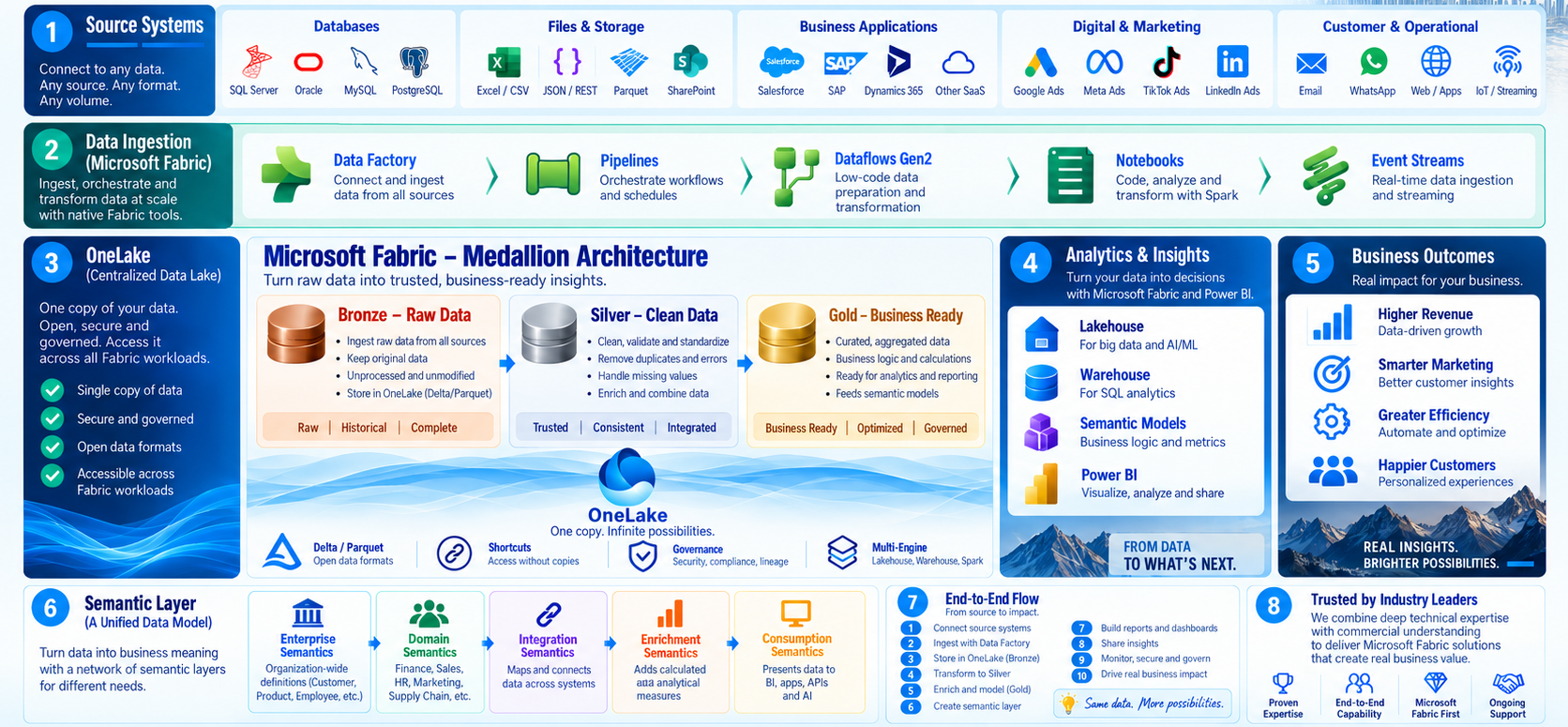 Illustrative patternAdapt to your sources, controls and operating model.
Read from sources to decisions
Source systems feed ingestion and processing. OneLake holds the shared data foundation; curated models express business meaning for reporting and appropriate AI use. Security, orchestration and governance apply across the path.
Design consideration: The right ingestion method and storage pattern depend on access, freshness, volume and the skills of the operating team.
Traditional Architecture vs Microsoft Fabric
From disconnected hand-offs to one governed analytics platform.

Compare the hand-offs
The pattern contrasts separately managed ingestion, storage and analytics layers with a connected Fabric platform. Consolidation can simplify some hand-offs while existing systems may still remain part of the architecture.
Design consideration: Fabric is not a reason to replace every existing investment. Assess integration needs, responsibilities and operating cost before consolidating.
Microsoft Fabric Medallion Architecture
Bronze → Silver → Gold for governed, reusable and business-ready data.
Follow the quality progression
Bronze preserves source data, Silver applies cleaning and conformance, and Gold publishes curated data for specific business uses. Semantic models define how those outputs are measured and consumed.
Design consideration: Layering should serve quality and reuse. Define what changes at each stage and who owns validation.
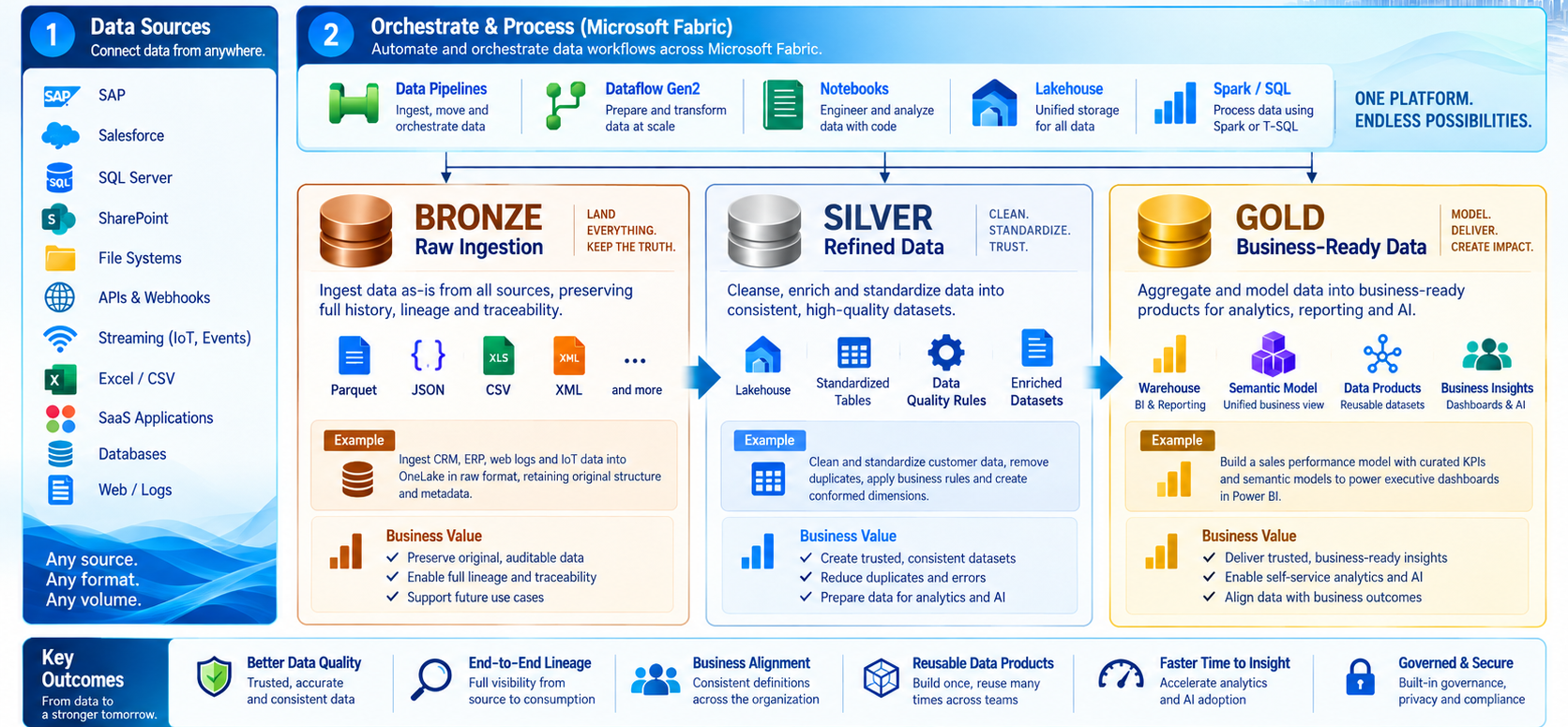
Medallion Architecture Explained
A practical Microsoft Fabric pattern for Bronze, Silver and Gold layers.

Separate source records from business products
Raw data, quality improvements and business-ready outputs have different responsibilities. The diagram shows how those responsibilities can be expressed in a Medallion design.
Design consideration: The number of copies, refresh cadence and transformation approach should fit the workload, not a fixed diagram.
Semantic Data Layer
How business meaning connects governed data, metrics, analytics and AI.
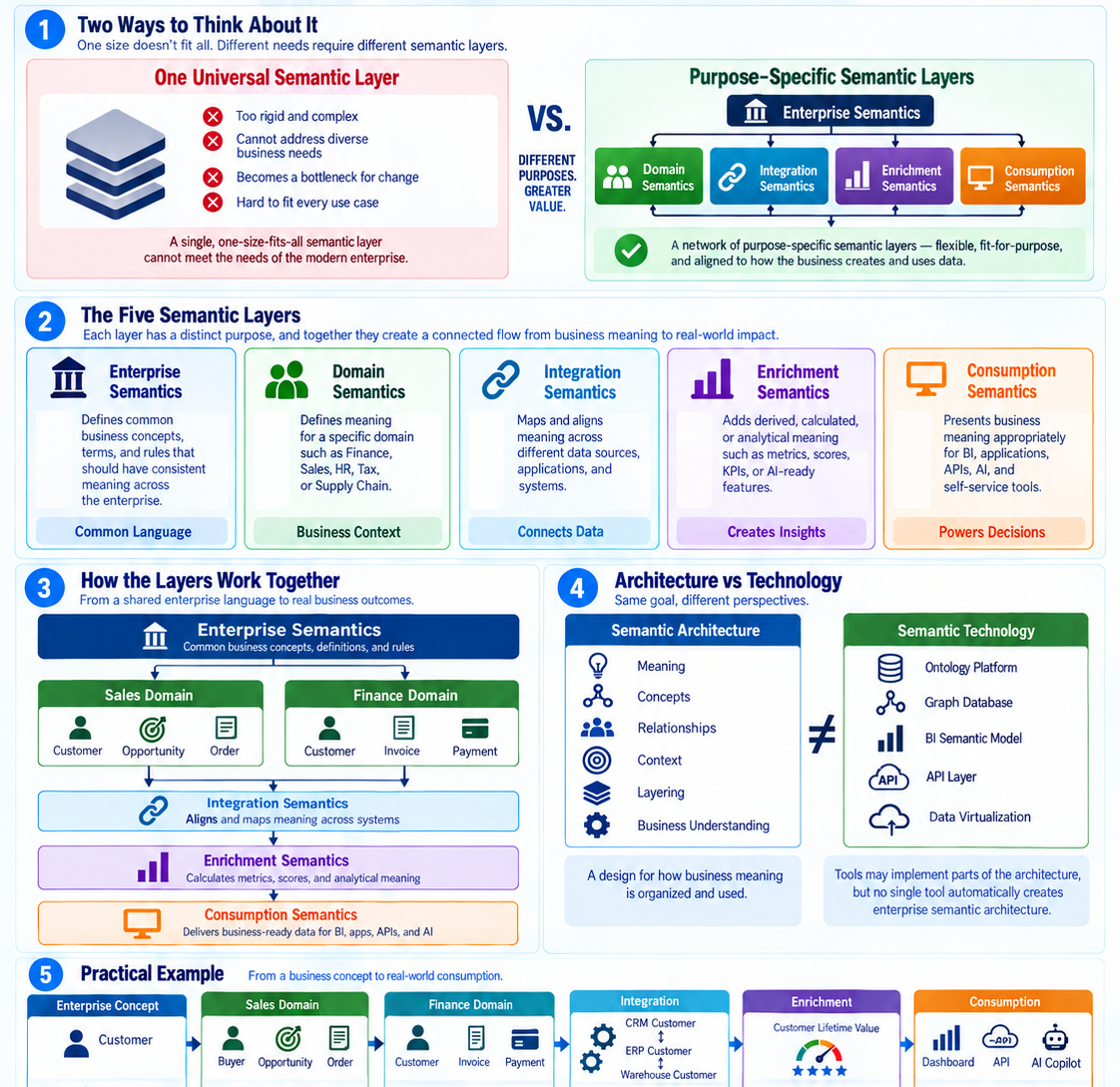
Find the shared business meaning
A semantic layer defines measures, dimensions, relationships and permissions over governed data. Power BI and appropriate AI experiences can then work with that shared business context.
Design consideration: Agree the grain, measure owners and security model. A shared model is useful only when teams understand and validate its definitions.
From Microsoft Fabric to Copilot
Build governed business context before asking AI to answer.
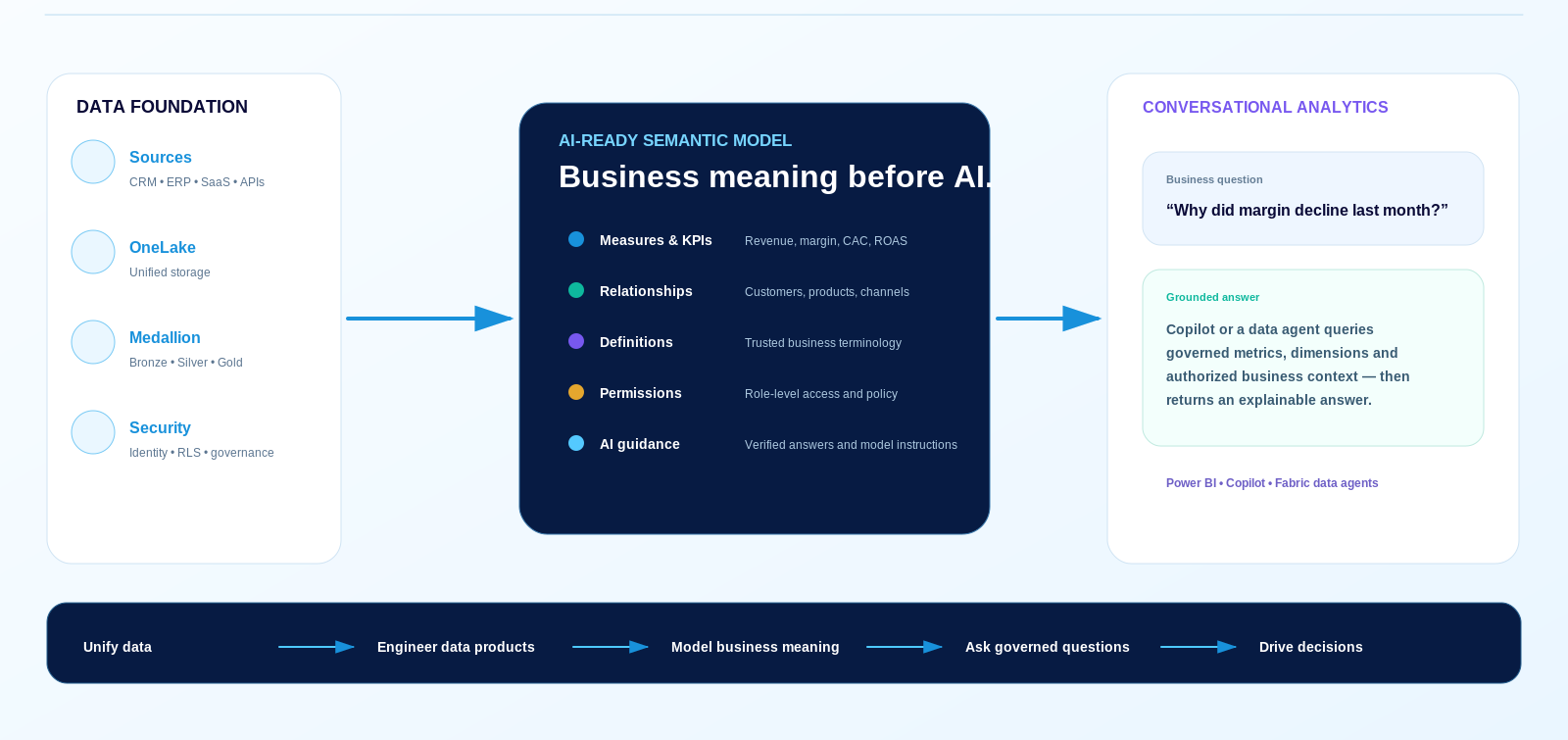
Trace an answer back to its foundations
The pattern connects governed Fabric data and semantic context to Copilot experiences. Business terminology, permissions and evaluation belong in the design before conversational access is introduced.
Design consideration: Check current licensing, capacity, feature availability and tenant configuration. AI output needs validation; this diagram is not a connected Copilot experience.